
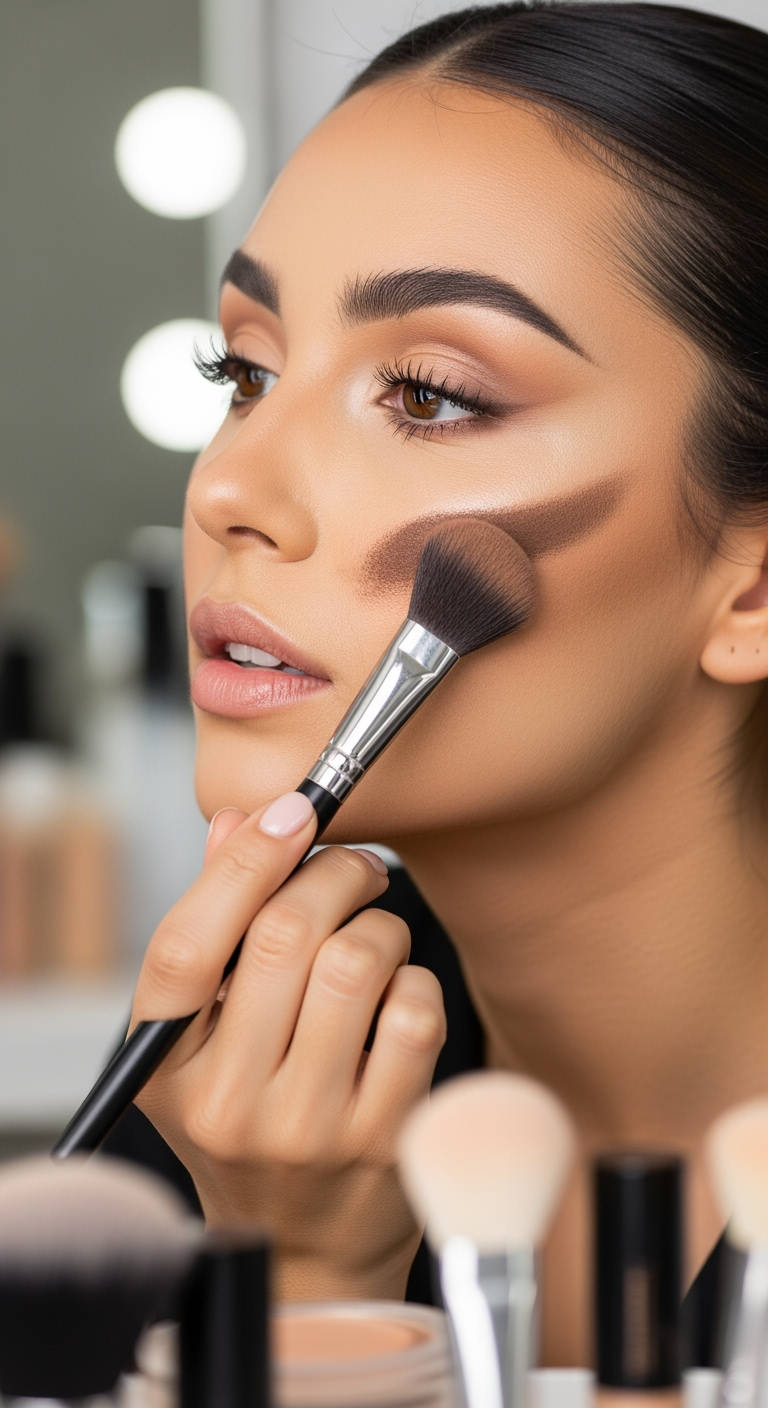
Powder Power: How to Contour With Powder Like a Total Pro
Contouring has had its fair share of viral moments. From dramatic Instagram makeup circa 2015 to the more natural, sculpted looks we see now, it’s safe to say contouring is here to stay. But here’s the thing—not all contouring is created equal.
If cream contour feels a little intimidating (or you just want something easier to blend), powder contour is your best friend. It’s quick, forgiving, and perfect for everyday sculpting. So let’s talk about how to contour with powder—step by step, no makeup degree required.
Table of Contents
Why Choose Powder Contour?

Powder contour is basically the “training wheels” of contouring. It’s softer, easier to control, and works with all skin types—especially if you’re oily or live in a humid climate.
Perks of powder contour:
- Easier to blend than creams.
- Great for subtle, natural definition.
- Layerable—you can go from soft to sculpted without overdoing it.
- Pairs beautifully with powder foundation or setting powder.
Think of it as the quick, fuss-free way to shape your face without spending 20 minutes buffing in cream sticks.
Step 1: Pick the Right Shade

Here’s the number one rule of contouring: your contour shade is not a bronzer.
- Bronzer is warm and golden—meant to mimic a sun-kissed glow.
- Contour is cool-toned—meant to mimic natural shadows.
When choosing a powder contour shade:
- Go for something 1–2 shades darker than your skin tone.
- Look for a cool or neutral undertone (ashy taupe, soft brown—not orange).
- If you’re fair → light taupe or soft beige-browns.
- If you’re medium → muted mocha shades.
- If you’re deep → rich, cool espresso or deep brown with no red undertone.
Step 2: Grab the Right Brush

The brush you use makes all the difference. Skip flat foundation brushes—you want something fluffy for blending.
- Angled contour brush → perfect for cheekbones.
- Small tapered brush → great for nose and precise areas.
- Fluffy blending brush → for softening edges.
If you’re new, an angled brush is the most beginner-friendly option.
Step 3: Know Your Contour Map

Before you start, think of contouring as creating shadows where you want depth. The classic “3-shape” technique works for most face shapes:
- Cheekbones: Start from your ear, sweeping diagonally toward the corner of your mouth. Stop halfway—don’t drag it all the way down.
- Jawline: Sweep along your jaw to sharpen and define.
- Forehead/temples: Lightly dust along the hairline to balance proportions.
- Nose (optional): Use a smaller brush to contour along the sides for a slimmer look.
Pro tip: Always keep your contour slightly higher than you think—it lifts your face instead of dragging it down.
Step 4: Application Technique

Okay, brushes ready? Let’s get into the “how.”
- Pick up product—tap your brush into the powder contour, then tap off the excess. (This saves you from harsh lines.)
- Apply gently—start where you want the most definition (like the outer cheekbone) and move inward with light strokes.
- Blend, blend, blend—use circular motions to diffuse the line. No harsh stripes here.
- Build slowly—powder is easy to layer, so start sheer and add more as needed.
Step 5: Balance With Highlight

Contour without highlight can look flat. Add dimension by pairing your shadows with light:
- Use a matte or satin highlight powder under your eyes, on the chin, and center of the forehead.
- Add a shimmery highlight on cheekbones and nose for glow.
This contrast makes your contour pop without looking muddy.
Step 6: Set and Finish

Once you’re happy with your contour:
- Dust a translucent setting powder around the edges for a seamless blend.
- If you want warmth, add a touch of bronzer on top (but keep it separate from your contour lines).
- Lock everything in with a setting spray.
Bonus Tips for Powder Contour

- Less is more. Start sheer—you can always add depth.
- Check in natural light. What looks blended under bathroom lights might be harsh in daylight.
- Match your makeup base. Powder contour works best over powder foundation or set liquid foundation.
- Mind the undertone. If it looks orange, it’s bronzer territory. Stick with cooler shades for realistic shadows.
Common Mistakes to Avoid

Even the best contour queens had to learn these the hard way:
- Using bronzer as contour. Too warm = muddy, unnatural.
- Not blending enough. If you see a harsh line, keep buffing.
- Contouring too low. Always stay just under the cheekbone, not in the hollow of your jaw.
- Going too dark. Stick to 1–2 shades deeper, or it looks harsh.
- Overloading your brush. Tap off the excess to avoid patchiness.
Who Powder Contour Works Best For

Honestly? Everyone. But it’s especially great if:
- You have oily skin (powder controls shine).
- You prefer natural looks over heavy glam.
- You’re new to contouring (powder is way more forgiving than cream).
The Bottom Line
Powder contour is the easiest, most foolproof way to add definition and sculpt your face without overthinking it. The key is shade choice, placement, and blending. Once you nail those three, you can contour in under five minutes flat.
So next time you’re standing in front of the mirror wondering how to contour with powder—remember: shadows, light, and blend until your hand hurts. The result? Effortless definition that looks like you were born with killer cheekbones.


